
Explainer
POSH training vs POSH compliance
“We did the training last year, so we are compliant.” It is one of the commonest misunderstandings about the POSH Act. Compliance is the system; training is how the system comes to life.

Side by side
The difference at a glance
| POSH training | POSH compliance | |
|---|---|---|
| Legal basis | Section 19(c); Rule 13 | Sections 4, 13, 19, 21, 22 and 26; Rules 7 and 14 |
| What it is | Awareness for everyone; orientation and skills for the Internal Committee | The structures an employer must have and be able to prove |
| Who is involved | Employees, managers, leadership, the committee | Employer, Internal Committee, District Officer |
| What it produces | Attendance, assessment results, certificates | Committee order, policy, notices, inquiry reports, annual report |
| How often | At regular intervals; the Act fixes no frequency | Continuously; the annual report every calendar year |
| If it is missing | Employees don’t know their rights; inquiries can be challenged | Fine of up to ₹50,000; more for repeat offences |
Why both
One without the other leaves you exposed
A policy nobody has read protects nobody. A committee that has never been trained is a legal risk dressed up as a safeguard: its reports can be challenged and its findings set aside. And training without a working system leaves employees aware of their rights but with nowhere credible to take a complaint.
The courts are moving the same way. In August 2025 the Supreme Court ordered a district-wise survey of whether employers have actually constituted their Internal Committees. The question is no longer “Do you have a policy?” but “Show us it works.”
Proof
85,000+ people trained since 2018
- Sessions for government officers at the Uttar Pradesh Academy of Administration and Management (UPAAM), Lucknow.
- The Internal Committees of all 75 districts of Uttar Pradesh Police, and officers up to DG rank.
- External members on the Internal Committees of CRPF, PAC, the Lucknow and Varanasi Police Commissionerates and the Lucknow Development Authority.
- Empanelled with the Ministry of Women and Child Development (SHe-Box).
Some of the organisations we have trained
Who delivers it
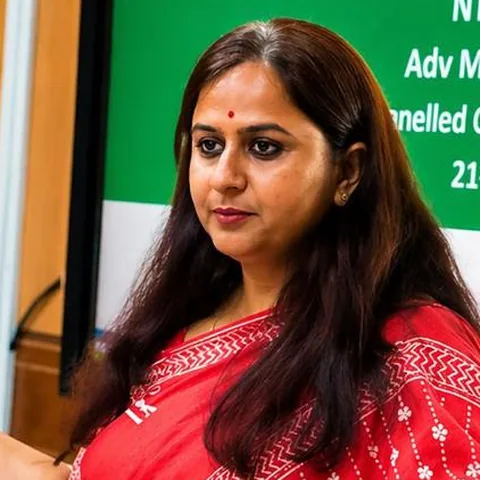
Adv. Manjary Upadhyay
Adv. Manjary Upadhyay is the President of Jijiwisha Society, Lucknow, an advocate and a Master Trainer on the POSH Act, 2013. With the Jijiwisha team she has trained more than 85,000 people, including the Internal Committees of all 75 districts of Uttar Pradesh Police. She leads its 14-hour POSH Train-the-Trainer certification.
Quick answers
Training vs compliance: questions buyers ask
Is POSH training mandatory in India?
Yes. Section 19(c) of the POSH Act requires employers to organise awareness workshops for employees at regular intervals and orientation programmes for Internal Committee members.
Does POSH training alone make a company compliant?
No. Compliance also requires a validly constituted Internal Committee, a written policy, displayed notices, an annual report and action on inquiry findings.
Who needs to comply with the POSH Act?
Every employer. Those with 10 or more employees must constitute an Internal Committee. Complaints from workplaces with fewer than 10 employees go to the Local Committee in the district.
Request a proposal
Get an itemised quote
Tell us who needs training and how. We reply with a written scope: audiences, format, duration, batch size, languages, locations and deliverables.
Prefer email? Write to president@jijiwishasociety.org.